Showing posts with label Extant Pieces. Show all posts

Thursday, October 5, 2017

Mary Ellen's Swim Suit: A Look at a 1940's Original


When I venture into a new era, if possible, I like to find an original garment that I can add to my collection, study, and love. I thought the name made this swim suit especially fun! 

I'm not sure if this was a bought or home-made suit. The somewhat sloppy nature of the stitches suggests home-made, but the overcasting on the seams leads me to question this. Any ideas? 

Either way, I'm loving that stripe matching in on the skirt!


Sunday, June 11, 2017

Inside a Turn of the Century Evening Gown, Part 2: The Skirt


Yesterday I shared pictures of the bodice. While the inside of the bodice is fairly messy and pieced, the skirt of this gown is fantastic! It is so heavy and engineered!

I'm always really excited to get to study a skirt, since they seem to rarely survive, while bodices, which don't employ yards and yards of fabric just waiting to be remade, are so much more common.

The shape is fairly simple. Here is is laid flat. The CB is to the right, CF on the left. 

Saturday, June 10, 2017

Inside a Turn of the Century Evening Gown, Part 1: The Bodice


It's been a while since I've shared the insides of one of my collection. I pulled this gown out of the tissue to study the insides for a new evening gown I have started. This dress looks like it could be home-made, but if it was, it was made by someone who knew what they were doing. I suppose it could have been made by a private dressmaker, but I very much doubt it came from any kind of fashion house or department store. There are no labels and the inside is kind of a mess. Of course, the messy insides are my favorite! So, on to the masses of pictures!

I'll start with the bodice today. The skirt will follow, since there are just too many pictures for one post!

Enjoy!


Tuesday, May 13, 2014

A Look at a c. 1900 Petticoat


I have kind of a thing for petticoats. Whenever I see a good one on eBay I like to treat myself.

To be good, they don't necessarily have to be pristine or fancy. I actually really like the messy ones. The home made ones. The ones that have patches and darning and messy stitches.

Of course, some pretty whitework never hurts...


I'm guessing this petticoat is about 1900 or there about. The shape of it doesn't allow for a bustle, but it is quite long to the floor, so skirts were still about floor length. The construction is interesting, almost like it was pieced with strips of fabric. They do get wider toward the hem, which makes sense to support and shape a skirt that widens at the bottom, like a gored skirt. I get the impression the whitework started life on an older petticoat, but I'm just guessing. The rest of the skirt is pretty haphazard; I can't imagine someone taking the time to embroider all that for this skirt.


Above you can see another strip at the hem that creates a ruffle. Behind the ruffle, on the inside of the skirt, is a tuck, which is shown below. There are a few tucks on this piece. Petticoats often have lots of tucks, both to create shape and the raise or lower a hemline. Usually the tucks in the lower half of a skirt add shape to the hem, and tucks up high, like around the thigh raise the hem. I have seen loads of these in antique petticoats.


It fastens at the side with a placket and vertical buttonhole.


The hip is shaped with a series of darts, front and back.


Ah, and my favorite part. I love to see alterations and mending. Below are a few darned patches. I love how antique clothes have darned bits where they were torn. Today we just toss things that get damaged. The mending adds so much character!


And I also love to see wonky stitches. They kind of show that a real person made this. I think it's cool. Kind of like how the mending shows that a real person actually wore it.


And one last interesting thing: the side seams are unfinished.


In my own sewing, I waste a lot of time finishing seams in undergarments because I think they will unravel in the wash. Obviously not. Now, granted, if you're working with a particularly loose weave, its good to address it, but most often, even if the edges do unravel a bit, such as in the wash, they tangle together, finishing themselves off, much like a pair of cutoff jeans. Also, seams that happen to be cut along the bias won't unravel.

So, my new mid-spring sewing resolution: don't waste so much time on seams!

Now, off to make a petticoat!

Thursday, May 8, 2014

A Look at Some Vintage Jodhpurs

Today I would like to share a pair of vintage jodhpurs. I'm not entirely sure of their date. Could be anywhere from the 20's to the 50's. Likely, they are somewhere in the middle. It's unlikely that they are more recent than that, because as stretch fabrics came in to play, they eliminated the need for those roomy hips, which allowed the rider ease of movement. Those roomy hips are the jodhpur pant's most recognizable trait.

When I was little, I called them "director pants." Just throwing that out there :)

In short, jodhpur pants start in India and trickle on down to western sportswear and uniforms. They are primarily riding pants, but are seen worn as general sportswear through the early 20th century. Much like the riding habits of the 18th century, which weren't necessarily worn only for riding. Jodhs also are seen in uniforms. Aviators, motorcycle police, Dudley Do-Right, directors...

For a really detailed look at their history, check out this great article by V is for Vintage. It's full of lots of awesome pictures, too.

My pants, however, I do believe were actual riding pants. The seams are felled, and the crotch has an interesting patch that covers where the seams cross, which would make them more comfortable when in the saddle. They are also made of whipcord, a durable twill weave often seen in vintage equestrian clothing.

So, on to the pants...

Monday, June 3, 2013

A little visit to the LACMA (and a look at a pink anglaise).


While I was in Los Angeles this last weekend, I took a little side trip to the Los Angeles County Art Museum. I'm a big fan of museums. I just love walking around them, and of course, I have to visit the costumes!

Correction. Costume.

There is only one on display right now. One. Boo.

But it was a pretty one, so it was worth it. Another plus, it was displayed in such a way that I could get really, really close to it. So nice to see all the detail!

Scroll on down. I took lots of pictures.

"Silk plain weave (taffeta) with silk
supplimentary-weft patterning."
England, circa 1775
LACMA, M.57.24.8a-b

Saturday, May 4, 2013

A Look at an Original 19th C. Petticoat


Happy weekend all! 

Today, I wanted to share with you an original petticoat. My educated assessment is that it is in the late 70's, natural form style. It is narrow and flat-fronted, with the telltale tie-back. It is walking length. A similar, modern pattern in the same style would be the Truly Victorian Fantail Skirt (TV225), sans train. The same pattern I have been working with for a skirt and petticoat this week. 

When I start a project, in an era I'm unfamiliar with, I love to hunt for an original item or two to study. This was a great find, since I rarely have seen this style of petticoat up for sale. An interesting thing about this piece, which I haven't seen a whole lot of in later Victorian petticoats, is it is entirely hand stitched.

And now, pictures. Lots and lots.

Front

Tuesday, February 19, 2013

A Tea Cup Started It All


The other day, one of my oldest and closest friends, Jose, text me and suggested Downton and tea.

Um, of course. 

Naturally the Titanic tea cups had to come out. I should mention that Jose and I used to sit in fourth grade together and squeal about the movie. I squealed about the dresses and he squealed about more manly things, like turbines and smoke stacks lol. But anyway, Titanic related squealing goes way back for us. When I bought the teacups, he was the first person I texted. 

So, if you give a mouse a cookie, or rather, if you give a costumer a tea cup, she's going to get inspired... The tea cup lead to a whole afternoon of finding Edwardian bits in my closet and roping in Jose for an impromptu photo shoot. Jose just got back from dressing back stage at fashion week, so I felt very privileged. Squeal, again. 

I love using Pinterest to get my thoughts together, so check out my board of Edwardian eye candy that inspired us for the shoot. Lots of Lilly Elsie...


The dress is an eBay find and it has been patiently waiting it's turn to be reintroduced to the world. It's a beautiful dress of ivory silk and lace. It looks early teens to me, for sure. Amazingly, it fits me, and luckily, it is in strong enough condition to try on. Unfortunately, though, it's too fragile to actually wear anywhere.

It's has surprisingly simple construction for an Edwardian gown, with no boning or inner bodice, so I would love to recreate it one day. Scroll on down for a bunch of pictures of the inside.

I wore it with vintage kidskin gloves, my Astoria shoes, some pearls my Grandmother gave me and a gorgeous, gorgeous, gorgeous fan I picked up on my last trip to England. Underneath, I have some Edwardian era slips and a corset I got a while back from Period Corsets. And I must say, long line Edwardian corsets are not so comfortable. Something about how they constrict the hips. It took some getting used to.

Tuesday, January 29, 2013

A vintage day out in 1930's knits.


An oldie, but a goodie. I found these photos from last October that I never shared. Sorry for the weird cropping, but I didn't know if any of the other girls in the photo wanted to be shown. It was a "vintage" outing.

Wednesday, January 16, 2013

Kensington Palace, part 3: A Court Mantua


I love big dresses, but there is something about these mid century court gowns that's just absurd! Take a browse down the photos. It amazes me how very narrow this dress is from the side. It reminds me of a paper doll version of an 18th century gown -- wide from the front, disappears from the side!

I will say, though, I love the stomacher and pinked trim across the skirt. Very pretty.

Tuesday, January 15, 2013

Kensington Palace, part 2: Is that Christmas tinsel?!


In another room at Kensington Palace, two beautiful 18th century dresses were on display. Today I'm sharing the first one -- my favorite.

I LOVE this dress. Oh my gosh. 

It is made up of such interesting fabric. So often we see heavy silk brocades, embellished with goldwork, but this light, airy dress is not only the sole robe a la francaise I have ever seen made up of sheer, musliny cotton, but also sheer cotton that has been heavily embroidered in metal. The silver and gold "thread" is flat, thin strips, which are very, very much like christmas tinsel to look at.

The cotton is so sheer, you can see through the layers to the embroidery beneath. Very evident in the top photo.

The only other dress I can compare it to is this robe a l'angliase from the Met.

Sunday, January 13, 2013

Kensington Palace, part 1: Queen Victoria's Dresses


On a recent trip to Kensington Palace I was delighted to find a new exhibit about Queen Victoria. It was kind of, shall we say "artistically" done, so I didn't see a lot of information about each piece, but they are pretty to share, never the less. 

She was a tiny lady. I'm only 5'4'', and standing next to her dresses, I felt like a giant. Mayyyybe she reached five foot. I'm guessing. 

This first dress was the only one I found information on. In each room there was a little book tucked aside with all the information on each exhibit. They were hard to track down, and when found, often the book was already being read by someone else, so I kind of gave up looking for it.

But anyway, this silk dress was originally black. Time has faded the color to a brown, much like how those fugitive purples act.


Friday, January 11, 2013

Another dress from the India Rooms. Muslin, c. 1795.


Oh, this is a pretty one!

I don't have much to say. I'll just sit here and drool and let the pictures speak for themselves.

Thursday, January 10, 2013

Chintz Gowns at the V&A


In an earlier post, I mentioned there were some beautiful chintz gowns in the India rooms at the V&A. There were three on display, two of which I have seen before. The third, the embroidered gown on the right in the picture above, was new to me. I think it's my favorite of the three. It has tons of darning and patching, which I always love to investigate.

First, a printed fabric from South-east India, made up in the 1770's. 

Tuesday, December 11, 2012

A mid 19th century silk bodice. Alterations and split seams galore! Lots to study.

A mid 19th century bodice.


So this little bodice is another eBay find. I've been on there a lot in the last couple months...

The outter fabric is a very fine, thin, plain weave, cream colored silk. The lining is a thin twilled cotton. It's much softer and more thin than any twilled cotton I have seen available. Nothing like a jean or coutil. The bodice appears to be stitches with a combination of silk and cotton thread. It also appears two different colors and weights of silk thread were used: a fine, light silk on the exterior and a thicker, darker (perhaps darkened with age) silk was used on the inside. The bodice is constructed with machine and hand stitches.

The bodice shows signs of alterations, specifically being let out at the side seams. The arm holes are very tight, at just shy of 10" around. The front is boned in multiple spots, the darts encasing the 1/4", flat bones. The back closes with hook and eyes on the lining and holes, for lacing, on the silk. The eyelet holes are finished in small, tight overcast stitches, not buttonhole. The center back is piped, the piping encasing thin, squared boning, which shows where the boning has broken and the silk has split. The boning is very thin, but appears to be whalebone wrapped in paper. The edges of the bodice, along with the armscye, are piped as well, with 8-ply white cotton cord. The top and bottom edges are faced with the same cream silk. The bertha, or the front bust decoration, is stitched into the seam at the shoulder and sleeve, but only held down with a pin at the center front. 

The pictures are taken with the bodice against a 1" square grid, for scale. Loosely measured, the bodice is 28" at the bust and 21" at the waist. The center front neckline to point is 14.5" and the center back is 15.5".

The armscye is piped. The sleeve is pleated
to the armscye. The bertha is joined
at the seams of the sleeve and shoulder.

Inside the sleeve. You can see the cotton
lining. The sleeves probably used to puff.

Sunday, December 9, 2012

Some lovely whitework trim, circa 19th century.


I came across this great trim on eBay. I bought it thinking it might be nice at the top of my 1903 Edwardian corset. I thought it looked similar to the trim on this Edwardian corset, owned by Shelley Peters.

C. 1912 Edwardian corset.
Click here for loads more pics and info!

The seller said it was "Victorian", but I can't tell for certain how early or late. It may be early 1800's. Now that I have it, I don't think I'll use it for the corset after all. I don't want to cut into it, it's so pretty!


It is hand embroidered and the thread and fabric are cotton. The fabric is a very soft, fine plain weave, like the softest lawn you could ever find, or a true muslin. Very gauzy. The design looks to be grapes with flowers and leaves. It's done in satin stitch, which has been padded, with buttonhole around the openwork and at the scalloped hem. The heart shaped petals on the flowers are outlined in satin and filled with a closely spaced seed stitch. The thread used for the embroidery is a non-divisible two ply, very thin, much like one strand taken from a skein of 6 strand DMC floss. I think each of said strands is a size 25. The picture at the very top shows the embroidery and sheerness of the fabric very well.

Most of the piece, which measures 50" by 3", is in excellent condition, with only a small portion damaged with small holes.


In the following photo, you can see how the ends are treated. This 50" by 3" piece is complete and not a cut off portion of the original trim. The scalloped hem ends about 1/4" from the end, on both ends. The ends and the top are cut straight, with the top showing some evidence of having been hemmed.


In the next two photos, you can see some interesting evidence of the piece's former use left behind. Along the top, there are a few bits of thread left stitched. They show that the top once was finished with a rolled hem. I pulled on the threads to see if the edge would gather up, like a whipped gather, but it does not. The stitches are loosely spaced. It looks to me like that edge wasn't meant to be seen, so perhaps it was just quickly finished to keep it from unraveling. Why it is unpicked now, I have no idea. Any guesses?


There is also a little stitch, done with double thread, about 16" from the left end, and in the center width-wise (below). It is cut through on the back side, and is now only tacked through the fabric. While the thread along the top is fine sewing thread, this little stitch is done in the same thicker perle that is embroidery is done with. I wonder what it's doing there...


This last photo shows the back side of the work. The embroidery is mostly finished neatly, though some thread ends stick out. I would love to know what this was originally used for. I'm guessing some kind of exterior trim. The whitework is reminiscent of some mid to late 19th century under things I have, but the fabric is much, much finer. Maybe a gauzy collar or cuffs? Maybe it's much more recent, but something about it says like 1820's, 1830's to me. Any ideas?

Wednesday, December 5, 2012

Frances Folsom Cleveland's Gown

One of my favorite museums to visit is the Smithsonian's National Museum of American History in Washington DC. The first time I went I was a little kid, and you could not get me out of the first ladies' exhibit for anything!

Why, you ask?

Gowns.

Lots of gowns. Two hundred years of gowns.

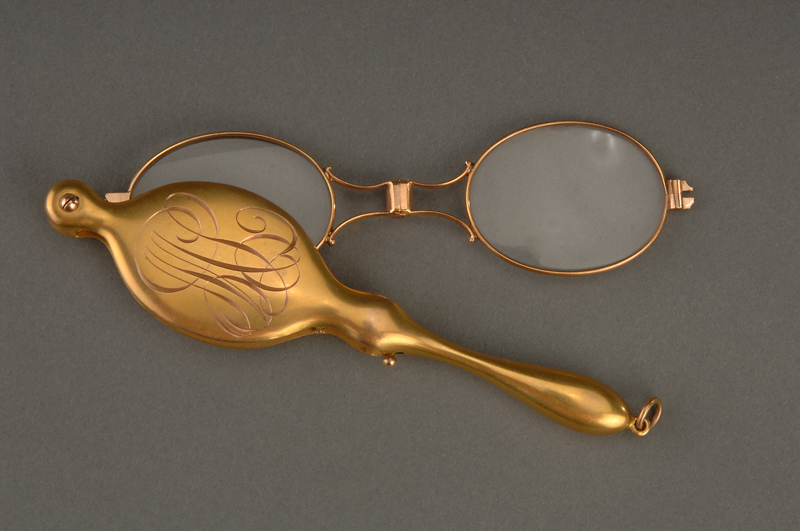
Though there is only a small selection of gowns and accessories out at any given time, apparently the museum has thousands of artifacts relating to the first ladies. They have Martha Washington's dress, Abigale Adams' shoes, Mary Todd Lincoln's lorngettes (do you think she took them to the theater that night?...) and lots of other artifacts from Martha to today. And since Helen Taft, it has been tradition for each first lady to give her inaugural dress to the exhibit.

But today I'm going to be highlighting Frances Folsom Cleveland's wedding dress.

Frances Folsom Cleveland's dress, c. 1886.

I totally love this dress. The gown is of ivory satin, with a sheer over trim at the bust. It has a grand train and some lovely asymmetrical pleats and gathers on the skirt. 

The day after the wedding, the Washington Post reported, "The bride wore an enchanting white dress of ivory satin, simply garnished on the high corsage with India muslin crossed in Grecian folds and carried in exquisite falls of simplicity over the petticoat. The orange blossom garniture, commencing upon the veil in a superb coronet, is continued throughout the costume with artistic skill. She carried no flowers and wore no jewelry except an engagement ring, containing a sapphire and two diamonds."

Frances Cleveland wearing the dress,
ornamented with garlands of
Orange Flower blossoms.

Frances married President Cleveland in June of 1886, in the White House's Blue Room, at the age of 21. She is the youngest first lady so far, and their marriage had the biggest age gap of all the Presidents and first ladies, with a 27 year difference. The Clevelands are the only couple to be married in the white house and to have a baby born in the White House, as well. 

A stereograph of the Blue Room, taken during the Grant years.

Apparently Frances was quite fashionable for the day and was so well liked, she even received fan mail!

The Clevelands' wedding in the Blue Room.
Image via Wikimedia Commons

Esther Cleveland is the only baby to be born
 in the White House. She was born on
September 9th, 1893.
The White House Archives

Unfortunately, when I went to see this exhibit again last year, the dress wasn't on display. However, I remember, very vividly, from years past, that the dress had a little dime sized, light brown, splattery stain on the lap. I always thought this was the coolest thing because it made it so real and I could really picture her wearing it, and oops! Spilling a a little soup, or perhaps wine, in her lap. 

Now, this didn't necessarily happen at the wedding, as the dress was altered after, to an evening gown for two state events later that same June, and once more for a formal portrait on the 29th of June, 1886.

The Smithsonian also has another dress of hers and a bonnet on display on their website. 

From the First Ladies' Fashions exhibit,
"Frances Cleveland wore this silk evening gown
with fur-edged hem and black-satin-and-jet trim during
her husband’s second administration. It was made
by Baltimore dressmaker Lottie Barton."

Cleveland's cream velvet bonnet.
And because it's almost Christmas... The Cleveland family's Christmas tree!

The Cleveland's Christmas tree, c. 1895,
displayed in the Family Room and Library,
 now the Yellow Oval Room.
The White House Historical Association

Have a happy day all!


Sunday, November 25, 2012

A Little Trip to The V&A


For those of us who stayed home this holiday weekend and did not travel, I thought I would suggest a little trip across the sea to one of our (yes, I'm sure anyone who reads this blog loves this place - how could you not!?) favorite places: The Victoria and Albert Museum.

The V&A is one of my very favorite museums for costume research. I haven't yet been to Kyoto, but I'm sure the Kyoto Costume Institute will tie for first if I ever get to go! But back to the V&A. 

Top five reasons why I love it:

1. It always has some kind of great costume exhibit going on.
2. It's in London
3. It has a huge shop
4. The shop has amazing costume books
5. You can take pictures!

Ok. Let's go!